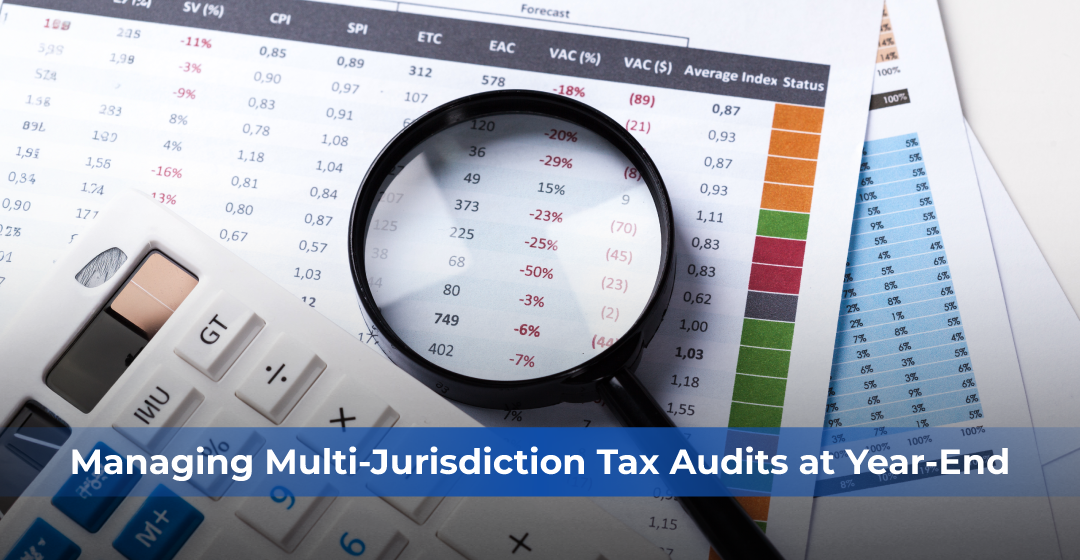






If your business operates across the UAE mainland, free zones, and other countries, managing tax obligations now requires a clearer structure. With the UAE corporate tax regime fully in effect, it’s important to maintain consistent reporting across all jurisdictions.
For founders, finance teams, and CFOs, managing multi-jurisdiction audit exposure is no longer optional. Doing so helps avoid penalties, delays, and unnecessary compliance risks.
Key Strategies for Multi-Jurisdiction Management
1. Create Clear Transfer Pricing Records
If your business engages in transactions with related parties, you must apply the arm’s length principle and maintain proper transfer pricing records. A Local File should be ready if the Federal Tax Authority (FTA) requests it. A Master File is only required for large multinational groups or high-revenue businesses.
The FTA’s Transfer Pricing Guide emphasizes that maintaining clear and up-to-date transfer pricing documentation significantly reduces the risk of tax challenges. Businesses should therefore periodically review their pricing benchmarks and ensure that intercompany charges are properly supported and aligned with market practices. While this documentation is not required to be submitted with the corporate tax return, it must be prepared in advance and be readily available to provide to the Federal Tax Authority (FTA) within 30 days of a request.
2. Use Double Tax Treaties
The UAE has over 140 tax treaties that prevent double taxation on the same income. But these benefits don’t happen automatically. You must get Tax Residency Certificates and document your treaty claims.
If you have ongoing disputes, the mutual agreement procedure (MAP) can help. It enables tax authorities in both countries to collaborate to resolve double taxation issues, often avoiding lengthy and costly legal action.
3. Group Your Connected Companies
Forming a tax group can simplify corporate tax compliance for related companies. When a parent company owns at least 95% of the share capital, voting rights, and entitlement to profits and net assets of its subsidiaries, and other conditions are met, the group may elect to file one combined corporate tax return instead of separate returns for each entity. This reduces the administrative burden and eliminates the need to track intercompany transactions for tax purposes.
However, tax grouping is optional and not available for all structures. To qualify, all members must be UAE-resident juridical persons, share the same financial year, prepare financial statements under the same accounting standards, and neither the parent nor any subsidiaries may be Exempt Persons or Qualifying Free Zone Persons for corporate tax purposes.
4. Keep Organised, Separate Records
Keep separate books for each jurisdiction where you operate. The FTA expects clear separation between mainland activities, free zone operations, and international branches. For corporate tax registration in UAE, well-organized records help protect your business during reviews.
It is also important to clearly separate qualifying and non-qualifying income. Store contracts, board minutes, financial statements, and transfer pricing files in an organized system for at least seven years.
5. Review Your Records Before Filing
Before submitting your return, review your records carefully. A mock or practice internal audit around 90 days before filing helps identify issues early, while there is still time to fix them. Transfer pricing policies should also be reviewed to ensure they reflect current market conditions.
While the concept of economic substance has not disappeared, it has been absorbed into the UAE Corporate Tax framework, particularly for free zone entities seeking to benefit from the 0% corporate tax rate as a Qualifying Free Zone Person.
6. Get Professional Help
Managing tax across multiple jurisdictions can be challenging. The rules change often, and what applies in one country can affect your UAE filings. Recent updates to corporate tax in the UAE have made reporting more detailed, especially for larger or growing businesses.
Working with a corporate tax consultant in Dubai helps keep your filings accurate and organized. This support often includes transfer pricing checks, audit preparation, and making sure VAT in UAE filings align with corporate tax returns.
7. Work with Tax Authorities
The Federal Tax Authority expects information to be accurate, well-organized, and submitted on time. When businesses respond clearly and promptly, reviews usually move faster and involve fewer follow-up questions.
If you disagree with a tax assessment, it’s best to use the formal objection process rather than informal discussions. For cross-border matters, recognized dispute resolution options are available.
8. Stay Updated on Rule Changes
As a final step, make it a habit to track changes in tax rules throughout the year. Corporate tax in the UAE is still developing, and new guidance can affect how businesses report income, claim exemptions, or prepare documents.
These updates often apply to free zone entities and cross-border transactions, where small changes can lead to compliance gaps. As a result, regularly reviewing official guidance and updating your processes early helps reduce audit risk.
Protect Your Business with Smart Tax Planning
As corporate tax in the UAE takes full effect, audits are becoming more detailed. For businesses operating across borders, even small gaps in documentation or reporting can lead to extended reviews or disputes.
If you are unsure how your current structure, records, or filings may be viewed during a UAE corporate tax audit, InZone’s specialists can help. Contact us to handle your tax audit with confidence.










 Founder's Podcast
 Free Zone
 Offshore
 Mainland
 Accounting
 Banks
Banks Services
 Resources