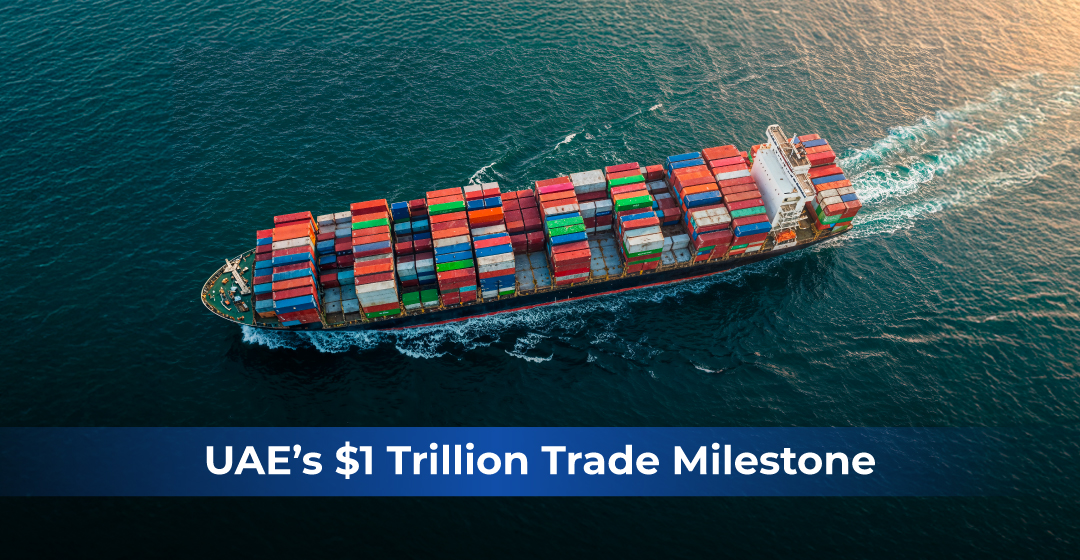






The UAE has reached a major economic milestone as non-oil foreign trade has crossed the $1 trillion mark for the first time in the country’s history. Overall, non-oil trade grew by 26% year-on-year, while exports surged by an impressive 45%. This is a clear signal that the UAE’s economic model is working and that opportunities for businesses are expanding fast.
For entrepreneurs and founders, trade growth on this scale reflects confidence from global markets, stronger demand for UAE-based products and services, and a business environment that is increasingly outward-looking.
What Non-Oil Trade Growth Shows
Non-oil trade includes everything from manufacturing and logistics to professional services, technology, food products, and creative industries. The fact that this sector has reached $1 trillion shows that the UAE’s economy is broad-based and resilient, rather than dependent on one industry.
As the UAE deepens trade ties across Asia, Europe, Africa, and the Americas, local companies are finding it easier to access international buyers and partners. This is reinforced by trade agreements and streamlined customs processes that reduce friction for exporters and importers.
Why This Matters for Entrepreneurs
1. More Export Markets, More Growth
A rise in non-oil exports means that UAE products, from manufactured goods to high-value services, are in demand around the world. For smaller companies and startups, this expanding global footprint creates opportunities to export goods, access international clients, and diversify revenue streams beyond the local market.
Whether you’re producing tech solutions, specialty products, or services like consulting and logistics support, the UAE’s trade surge suggests that global buyers are increasingly willing to engage with UAE-based businesses.
2. Increased Foreign Investment
Record trade figures show confidence from international investors and partners. When foreign firms see rising trade activity, they are more likely to invest, open offices, and partner with local companies. This can translate into more capital availability, joint ventures, and funding opportunities for early-stage and growth-stage businesses.
3. Supportive Government Policies
The government has emphasised deepening private sector partnerships and “future-ready” economic planning. Sheikh Mohammed bin Rashid al Maktoum highlighted how public-private cooperation has strengthened and that global trust in the UAE’s economy is “firmly established”.
For founders, this means continued access to supportive policies, trade-facilitating frameworks, and infrastructure that underpins business scale-ups.
The trade milestone aligns with the UAE’s long-term economic strategy, which places the private sector at the centre of growth. Sheikh Mohammed bin Rashid Al Maktoum highlighted that global confidence in the UAE has been firmly established, with the next phase focused on deeper collaboration with businesses.
What This Means Going Forward
As trade volumes rise, competition will increase, but so will demand. Businesses that invest early in strong systems, export readiness, and partnerships will be better placed to grow alongside the economy.
The $1 trillion milestone is a foundation for the next phase of growth, where ambitious founders can build companies that are regional from day one and global soon after.
Key Takeaways for Businesses and Founders
- The UAE’s growth is being driven by non-oil sectors where entrepreneurs can actively compete and scale.
- Export demand is rising, making international expansion more realistic for SMEs and startups.
- Strong trade performance attracts investors, partners, and long-term capital.
- The direction of policy continues to favour private-sector-led growth.









 Founder's Podcast
 Free Zone
 Offshore
 Mainland
 Accounting
 Banks
Banks Services
 Resources