





Table of Contents
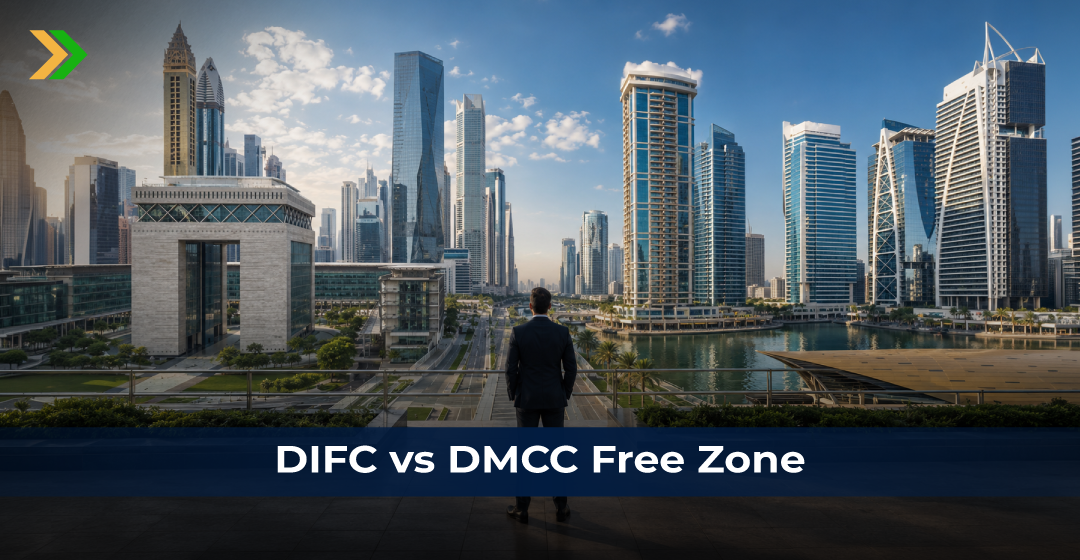
Dubai is home to some of the world’s most well-known free zones, but DIFC and DMCC stand out for very different reasons. Both offer excellent opportunities for businesses, yet they cater to different industries, budgets, and long-term goals.
At first glance, DIFC Dubai and DMCC Dubai may seem similar. They both provide tax advantages, modern infrastructure, and a business-friendly environment. However, once you look beyond the surface, you will find important differences in their legal framework, business activities, setup costs, and overall business ecosystem.
So, how do you decide which one is right for you?
This guide compares DIFC vs DMCC in simple terms, helping you understand the strengths of each free zone and choose the one that best fits your business.
DIFC vs DMCC: Quick Comparison
Before we explore each free zone in more detail, here is a quick side-by-side comparison.
| Feature | DIFC | DMCC |
|---|---|---|
| Location | Dubai International Financial Centre | Jumeirah Lakes Towers (JLT) |
| Legal Framework | Common Law (independent judicial system) | UAE Civil Law |
| Regulator | DIFC Authority and DFSA | DMCC Authority |
| Office Options | Physical offices and flexible workspaces | Flexi desks, serviced offices, physical offices |
| Setup Cost | Generally higher | Generally more affordable |
| Office Space | Often requires physical office for regulated activities | Flexi desk options widely available |
| Best for | Financial services, fintech, wealth management, holding companies | Trading, commodities, general business, tech and professional services |
What Is DIFC?
The Dubai International Financial Centre (DIFC) is Dubai’s leading financial free zone and one of the region’s most recognised business hubs. It is designed primarily for financial institutions, fintech companies, and professional service providers looking to operate in an internationally recognised regulatory environment.
Beyond financial services, the DIFC free zone also attracts law firms, consulting companies, family offices, and multinational businesses. Its independent Common Law framework, together with regulation by the Dubai Financial Services Authority (DFSA) for regulated activities, gives businesses access to a legal system that is trusted by companies around the world.
Businesses looking for international credibility and a strong financial ecosystem often see DIFC business setup as a long-term investment that supports regional and global growth.
What Is DMCC?
DMCC, also known as the Dubai Multi Commodities Centre, is one of the UAE’s largest and most established free zones. Based in Jumeirah Lakes Towers (JLT), it supports businesses across a wide range of industries, from trading and logistics to consulting, technology, and professional services.
One of the biggest strengths of the DMCC free zone is its flexibility. Whether you are launching a startup or expanding an established business, DMCC business setup offers a variety of license and office options to suit different needs. Combined with competitive DMCC fees and a vibrant business community, it remains a popular choice for entrepreneurs and international investors.
Key Differences Between DIFC and DMCC
At first glance, DIFC and DMCC may seem similar. However, there are several important differences that can influence which free zone is right for your business.
1. Legal Framework
This is arguably the single biggest difference between DIFC and DMCC. The DIFC free zone has its own independent legal framework based on English Common Law. It also has its own courts, allowing businesses to resolve disputes within a legal system that is familiar to many international companies and investors. Regulated financial activities are overseen by the Dubai Financial Services Authority (DFSA), while the DIFC Authority manages the free zone itself.
By comparison, the DMCC free zone operates under the UAE Civil Law system. Companies are licensed and regulated by the DMCC Authority, making it a straightforward option for businesses involved in commercial and professional activities that do not require a specialised financial regulator.
For many businesses, this distinction may not affect day-to-day operations. However, if you work in financial services or regularly deal with international investors, the legal framework offered by DIFC Dubai may provide additional confidence and certainty.
2. Business Activities
Another important difference between DIFC and DMCC is the type of businesses each free zone is designed to support. DIFC focuses primarily on financial and professional services. It is well suited to banks, investment firms, wealth managers, insurance companies, fintech businesses, family offices, legal practices, and other firms that benefit from operating within a globally recognised financial centre.
On the other hand, DMCC Dubai supports a much broader range of business activities. While it remains a leading hub for commodities trading, it also welcomes companies involved in consulting, technology, e-commerce, manufacturing, logistics, marketing, and many other commercial sectors.
That does not mean non-financial businesses cannot establish themselves in DIFC Dubai, or that financial firms cannot choose DMCC. However, each free zone has built its reputation around different industries, so choosing the one that aligns with your business activity can provide greater long-term value.
3. Strategic Location
DIFC is located in the heart of Dubai’s financial district, close to banks, multinational corporations, government entities, and professional service firms. For businesses that rely on face-to-face meetings with financial institutions or corporate clients, this central location can be a significant advantage.
Meanwhile, DMCC Dubai is based in Jumeirah Lakes Towers (JLT), one of Dubai’s busiest commercial communities. The area is home to thousands of businesses across diverse industries, creating a vibrant ecosystem for trading companies, consultancies, startups, and SMEs. Its convenient transport links and wide range of dining, retail, and lifestyle amenities also make it an attractive place to work.
Ultimately, the better location depends on your business. Companies seeking a prestigious financial address may prefer DIFC, while businesses looking for a dynamic commercial environment may find DMCC a better fit.
4. Cost Comparison
Cost is often one of the biggest factors when comparing DIFC vs DMCC, especially for startups and growing businesses. In general, DMCC business setup is considered the more affordable option. License fees, office solutions, and overall operating costs are typically lower, making it easier for entrepreneurs and SMEs to establish a presence without a significant upfront investment. Depending on your chosen package, DMCC fees can also offer greater flexibility as your business grows.
By comparison, the DIFC company setup cost is usually higher. This is largely due to its premium location, specialised business environment, and, for regulated financial firms, additional licensing and compliance requirements. Businesses should also factor in ongoing costs such as license renewal, office leasing, and regulatory obligations where applicable.
While cost is important, it should not be the only deciding factor. A lower setup cost may suit one business, while another may benefit more from the prestige and opportunities that come with operating in DIFC Dubai.
5. Office Space
Office space is another area where DIFC and DMCC differ. DIFC offers premium office spaces and flexible workspaces. However, businesses operating under certain regulated licenses may need a dedicated physical office to meet regulatory requirements. This means office costs in DIFC Dubai are generally higher, particularly for financial services firms.
By comparison, DMCC provides a wider range of workspace options, including flexi desks, serviced offices, and dedicated office space. This flexibility makes DMCC business setup especially attractive for startups and SMEs, allowing businesses to start with a smaller office and expand as they grow.
When comparing DIFC vs DMCC, think beyond your immediate office needs. Your chosen free zone should be able to support your business as it grows, without limiting your expansion plans.
6. Corporate Banking
Opening a corporate bank account is rarely instant in the UAE, but the experience can differ by free zone. DIFC’s reputation as a top financial centre, backed by DFSA regulation and Common Law courts, often makes banks more comfortable with DIFC-registered entities, particularly larger, internationally facing companies. For this reason, DIFC business setup can offer additional confidence when approaching banks for a corporate account.
DMCC companies open corporate bank accounts successfully too, especially with clear business activity, ownership structure and documentation. It is a well-established path given how many companies operate out of the DMCC free zone today. In both cases, an experienced business setup partner helps speed up the application process and avoid unnecessary delays.
Which One Should You Choose?
Both DIFC and DMCC offer excellent opportunities, but they are designed for different types of businesses. The right choice depends on what your business does today and where you want it to grow in the future.
Choose DIFC if you:
- Operate in financial services, fintech, banking, or wealth management.
- Want to benefit from an internationally recognised financial centre.
- Need an independent Common Law legal framework.
- Plan to work closely with banks, investors, or multinational companies.
Choose DMCC if you:
- Run a trading, consulting, or commercial business.
- Want a more cost-effective business setup.
- Prefer flexible office and workspace options.
- Need a free zone that supports a wide range of business activities.
There is no one-size-fits-all answer in the DIFC vs DMCC debate. The best free zone is the one that aligns with your business goals, budget, and future plans.
Start Your DIFC or DMCC Business with InZone
By now, you should have a clearer understanding of the differences between DIFC and DMCC. The next step is turning that decision into a smooth and successful business setup.
At InZone, our business setup specialists take the time to understand your business before recommending the UAE free zone that best fits your goals. Whether you are planning a DIFC business setup or a DMCC business setup, we provide end-to-end support, from company registration and licensing to visa processing and corporate banking assistance.
Contact InZone today to speak with one of our business setup experts.











 Founder's Podcast
 Free Zone
 Offshore
 Mainland
 Accounting
 Banks
Banks Services
 Resources