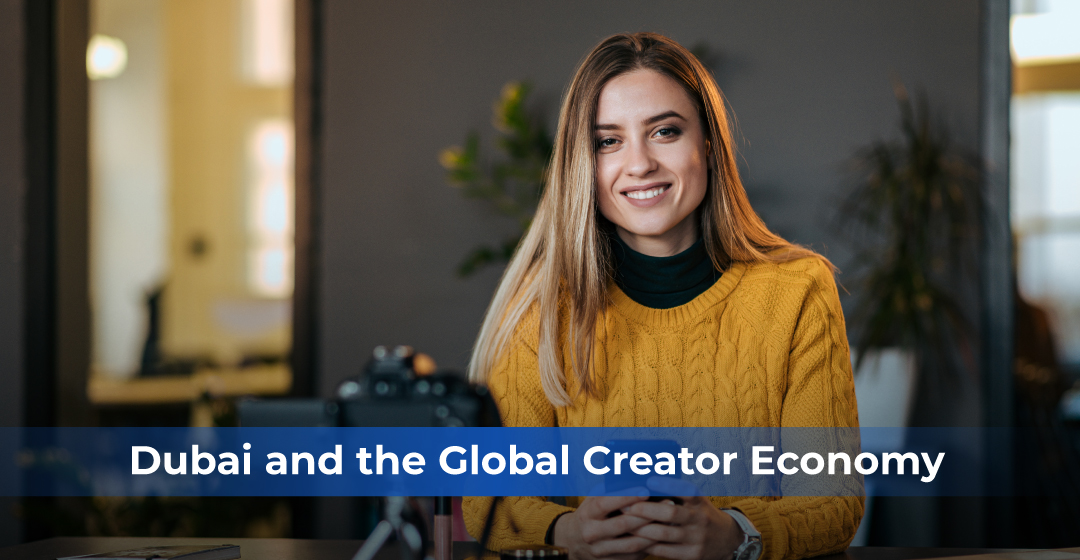






For most of the last decade, content creators were viewed as individuals: influencers with smartphones, ring lights, and platform algorithms doing most of the work. That definition no longer holds. Today, the creator economy is entering an industrial phase: structured, capital-driven, technology-enabled, and globally distributed.
Creators are no longer just posting content. They are building media companies. Channels are becoming studios. Content is evolving into intellectual property that can often be licensed, repurposed, and monetized across markets. The shift has changed a fundamental assumption: being a creator is no longer a side hustle. It is transforming into a sophisticated business.
Among global cities positioning themselves for this shift, Dubai stands out.
Dubai’s appeal to creators goes beyond tax efficiency or lifestyle. It lies in how deliberately the city has positioned itself as a regulated base for digital talent. World-class infrastructure, a globally connected location, advanced digital payment infrastructure, and a policy-led approach to emerging industries have made Dubai one of the most future-ready environments for creators who want to scale responsibly.
That direction is visible not just in policy but also in practice. From 9 to 11 January 2026, Dubai hosts the 1 Billion Followers Summit, an event that will place creators at the center of economic growth conversations. The summit is not just a celebration of influence but a signal that Dubai sees creators as long-term contributors rather than informal participants.
Why Dubai Pulls Ahead for Serious Creators
In some jurisdictions, creators still operate in legal grey areas, relying on informal arrangements for payments, brand contracts, and tax compliance. That ambiguity limits growth and creates long-term risk.
Dubai has taken a different approach. By formally recognizing content creation as a legitimate economic activity, the city has applied a familiar economic playbook to a new industry: establish regulatory clarity first and then enable scale.
Under the framework overseen by the UAE Media Council, creators who engage in commercial or promotional advertising activity on social media are expected to hold a valid advertiser permit, in addition to operating through an appropriate business or freelance license when required. This is not about restricting creativity but a move towards acknowledging that creators generate commercial value, and ensuring that value can be sustained, scaled, and protected.
The Compliance Reality: Influencer Licensing Is Not Optional
As creators transition into businesses, compliance becomes unavoidable, and influencer licensing is no longer optional. Advertising and promotional content on social media is treated as a commercial activity, and operating without the appropriate approvals carries regulatory risk.
Important deadline:
Based on official announcements and subsequent deadline extensions, individuals required to hold a UAE Media Council Advertiser Permit are expected to be compliant by 31 January 2026. This deadline follows a grace period introduced to allow creators time to regularize their status. Creators operating without the required permit beyond this date may face administrative penalties, limitations on advertising activity, or disruptions to payment and brand partnership arrangements, depending on the circumstances.
For full-time influencers already earning through brand collaborations, overseas creators relocating to Dubai, and hybrid founders running creator-led agencies or personal brands, this deadline is particularly relevant.
Additionally, as influencers start earning more, taxes come into the picture. If your total income from content and brand work goes over AED 1 million in a calendar year, you need to register for corporate tax. If your actual profits exceed AED 375,000, a 9% tax is charged on the amount above that limit. All UAE-based influencers with business income are also generally required to register for a Corporate Tax Registration Number.
Structuring for the Next Phase of Growth
The creators who will dominate the next decade are not those who chase every trend but those who build durable structures around their work. Compliance, far from being a constraint, is what creates a pathway for scale. It allows creators to grow teams, protect intellectual property, enter long-term partnerships, and expand internationally with confidence.
Whether you are already monetizing, planning a relocation to Dubai, or formalizing a creator-led business model, the right structure matters. The shift from creator to company is already underway. Ensuring your business has the right permits is the foundation that supports everything that follows.









 Founder's Podcast
 Free Zone
 Offshore
 Mainland
 Accounting
 Banks
Banks Services
 Resources