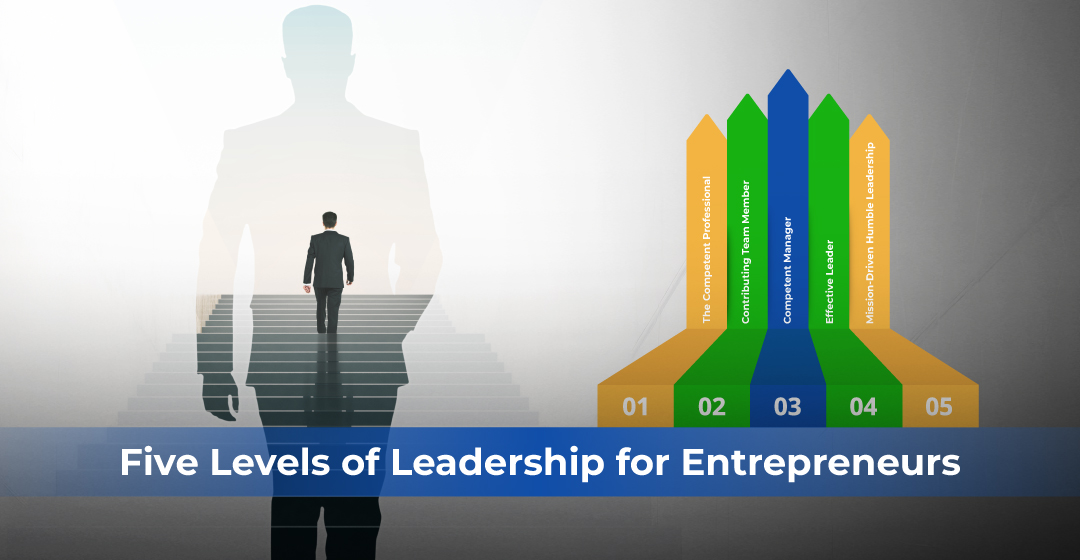






In Good to Great, Jim Collins introduces a unique way of thinking about leadership, something that develops in stages. This idea is important for entrepreneurs, as the way you lead a business at the start is not the way you should be leading it once it grows.
Level 1: The Competent Professional
The first level is the capable individual. This is someone good at what is required of them. They have the skills for their work and deliver results on time. Most founders start here, but the business will only grow when you do too.
Level 2: Contributing Team Member
At this stage, results come from working well with others and developing soft skills. You are now reliable, communicate clearly with others, and develop relationships in a team. For entrepreneurs, this becomes relevant when hiring employees, as progress is no longer dependent on individual effort.
Level 3: Competent Manager
The focus now shifts to organisation. At this stage, you plan work, set priorities, and manage people to ensure they deliver their work on time. If you fail at this level, growth becomes disorganised.
Level 4: Effective Leader
At this level, leadership becomes more than managing teams, as the focus shifts to developing other leaders. The business no longer relies on one central decision-maker. Instead, responsibility is spread across people who understand the direction of the company, its mission, and its vision, and can lead within it. The founders role shifts towards aligning visions so that different teams pull in the same direction without constant oversight. Decisions are now made faster because people understand the bigger picture, not just their individual tasks. This is the point businesses begin to scale.
Level 5: Mission-First Leadership with Humility and Professional Will
Level 5 leaders put the mission of the business above personal recognition and fame. They combine humility with a strong drive to see the organisation succeed over the long term. This type of leadership is shown in how successes and failures are handled. Where there is success, the credit is shared, and where there is failure, responsibility is taken. Decisions are made based on what will strengthen the business in the future, rather than what makes the leader look impressive today.
What Entrepreneurs Can Learn
The most important insight for entrepreneurs is that leadership needs to change as the business grows. Many entrepreneurs hit a plateau as they stay within Level 1 or 2. They remain competent individuals but avoid trusting others.
The framework also explains why some businesses grow fast and then collapse. Without mastering Level 3 through proper management, businesses become disorganized. Scaling efficiently requires slowing down to put structure in place.
Level 5 matters the most for long-term growth. Businesses built entirely around an entrepreneur’s personality or visibility tend to struggle when conditions change. Entrepreneurs who aim for this level hire strong leaders and make decisions that protect the business even when those decisions do not boost their personal recognition.











 Founder's Podcast
 Free Zone
 Offshore
 Mainland
 Accounting
 Banks
Banks Services
 Resources