

Table of Contents
IFZA and DMCC serve different business priorities: IFZA suits companies that need to keep formation costs down, while DMCC appeals to businesses that place greater value on an established trading network and international profile. This difference can shape the decision from the outset, particularly for startups weighing initial expenses against their plans for expansion.
Although both zones permit full foreign ownership and provide tax advantages to eligible companies, they differ in licensing flexibility, workspace options, regulatory requirements, and the costs involved in setting up and maintaining a business.
The comparison below looks at these practical differences between IFZA and DMCC to help you assess which free zone makes more sense for your company.
Key Takeaways
- IFZA is generally the more affordable option, with Zero-visa licence packages typically starting from AED 12,900, while DMCC setup starts from AED 35,000-55,000+.
- IFZA offers 2,000+ approved activities and is generally more flexible, while DMCC offers 1,000+ licensed activities across 20+ sectors and suits trading and commodities.
- IFZA suits startups, consultants, freelancers, and service businesses, while DMCC suits trading companies, commodities businesses, and established SMEs.
- DMCC has a stronger international reputation, which can help with banks, investors, and global partners.
- Both are Qualifying Free Zones, as eligible businesses may benefit from 0% tax on qualifying income if they meet the conditions.
- IFZA companies can typically be incorporated within 5-7 working days. DMCC typically takes 7-10 working days.
IFZA vs DMCC: Quick Comparison
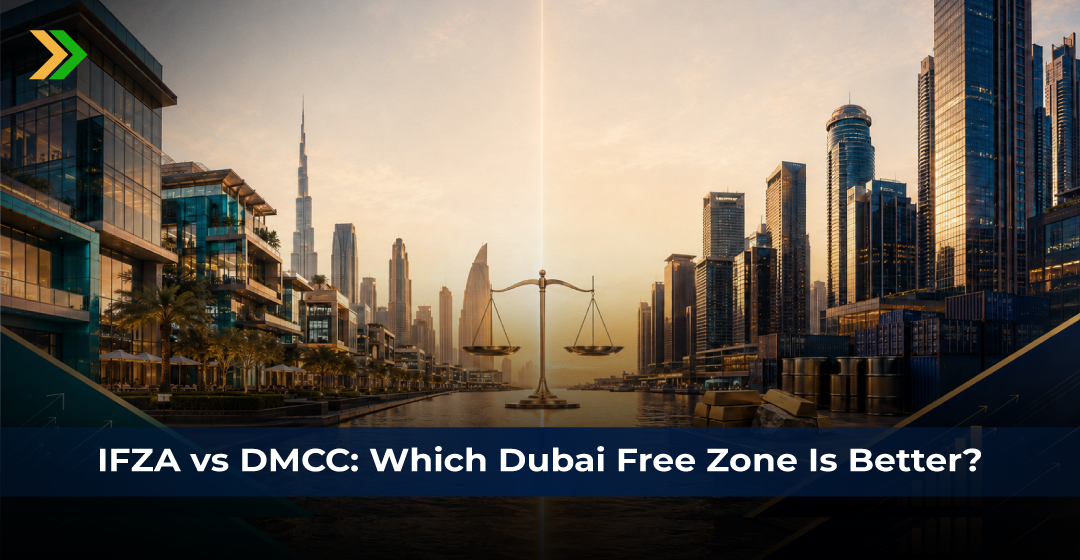
If you are deciding between DMCC or IFZA, the short answer is this: IFZA is generally better for affordability and flexibility, while DMCC is better for reputation, trading, and long-term growth.
Here is a side-by-side comparison of IFZA and DMCC across the key factors you should consider before making your decision.
| Factor | IFZA Free Zone | DMCC Free Zone |
|---|---|---|
| Licence Cost | Zero-visa licence packages typically start from AED 12,900. One-visa packages start from around AED 14,900. | Starts from AED 35,000–55,000+ for a basic first-year company setup, including licence, registration, office space, and visa-related costs. |
| Business Activities | Offers 2,000+ approved business activities across commercial, professional, and industrial sectors. | 1,000+ licensed activities across 20+ sectors, including trading, commodities, technology, and professional services. |
| Office Options | Flexi desks, shared workspaces, and private offices are available depending on your licence package and visa requirements. | Flexi desks, serviced offices, and private offices are available, with a physical office required for many DMCC license types. |
| Visa Options | Multiple visa packages are available, allowing businesses to choose the number of visas they need and increase capacity as they grow. | Multiple visa packages are available, with eligibility depending on the office space leased and the licence package selected. |
| Compliance & Reporting | Companies must comply with IFZA’s annual renewal requirements and maintain financial records in line with applicable UAE regulations. | Companies are generally subject to annual compliance requirements, including audited financial statements where applicable under DMCC regulations. |
| Corporate Tax | A Qualifying Free Zone. Businesses that meet the UAE Corporate Tax conditions may benefit from a 0% tax rate on qualifying income. | A Qualifying Free Zone. Eligible businesses may benefit from the same 0% corporate tax rate on qualifying income, provided they satisfy the relevant conditions. |
| Setup Timeline | Most companies can be incorporated within 5–7 working days, provided all documents are complete. | Company formation typically takes around 7–10 working days, depending on approvals and documentation. |
| Best For | Startups, consultants, freelancers, service businesses, and entrepreneurs looking for a cost-effective setup. | Trading companies, commodities businesses, established SMEs, and businesses seeking a premium business ecosystem. |
What Is IFZA?
The International Free Zone Authority (IFZA) is a Dubai free zone popular with startups, consultants, freelancers, and small and medium-sized enterprises (SMEs). Located in Dubai Silicon Oasis, it is known for its competitive pricing, flexible licence options, and broad selection of approved business activities.
Key features of IFZA include:
- More than 2,000 approved business activities
- Commercial, professional, and industrial licence options
- Flexi desks, shared workspaces, and private offices
- Visa packages to suit different business requirements
- Relatively low licence costs
One of the main advantages of the IFZA Free Zone is its flexibility, particularly for entrepreneurs looking for an affordable business setup in Dubai. Its range of activities and licence options makes it suitable for businesses with different operational needs, from consultancy services to trading.
What Is DMCC?
The Dubai Multi Commodities Centre (DMCC) is one of the UAE’s largest and most established free zones. Based in Jumeirah Lakes Towers (JLT), it was created to support commodities trading and now serves businesses across sectors such as technology, consulting, manufacturing, financial services, retail, and professional services.
Its key advantages include:
- More than 1,000 licensed activities across 20+ sectors
- A well-established international business community
- Networking opportunities and commercial connections
- Flexi desks, serviced offices, and private office options
- A recognised business environment for trading and international companies
One of the biggest strengths of the DMCC Free Zone is its established business ecosystem. Although setting up in DMCC generally costs more than IFZA, businesses involved in commodities, import and export, and international trade may value its commercial network and international reputation.
IFZA vs DMCC: Key Differences
The main differences between IFZA and DMCC include business activities, setup costs, banking, office and visa options, compliance, mainland trading requirements, and setup timelines. Here is how each factor compares.
Business Activities and Licence Flexibility
Both free zones offer a wide range of business activities, but IFZA is generally the more flexible option, while DMCC is particularly well suited to trading.
- IFZA: It allows businesses to choose from thousands of approved commercial, professional, and industrial activities. Multiple compatible activities are often included under one licence.
- DMCC: A DMCC license supports businesses across many industries. It is particularly well suited to trading, commodities, and international business.
If you want maximum flexibility or expect to expand into related services, IFZA is often the better choice. If your focus is trading, DMCC has the advantage.
Cost, Share Capital, and Renewal Fees
Cost is often a major factor when comparing IFZA vs DMCC, particularly for startups and small businesses. IFZA is generally more affordable, while DMCC comes with higher setup and operating costs.
- IFZA: Its licence packages are generally more affordable, and most businesses do not have a paid-up share capital requirement. Renewal fees are also typically lower than those in DMCC.
- DMCC: Setup and operating costs are higher, partly because of its office requirements and premium business environment.
If your priority is keeping startup costs low, IFZA is usually the better fit. If you are willing to invest more in an established business ecosystem, DMCC may justify the additional cost
Banking and Business Credibility
Both IFZA and DMCC companies can open corporate bank accounts, provided they meet the bank’s requirements. However, their international reputations differ.
- IFZA: It is well recognised by UAE banks and works well for most startups, SMEs, and service-based businesses.
- DMCC: It has built a strong international reputation, which can be an advantage when dealing with banks, investors, and global business partners.
For businesses that prioritise international credibility, DMCC may have the edge. For many startups and service providers, IFZA can be a suitable option.
Office Requirements and Visa Eligibility
Both free zones offer flexi desks, serviced offices, and private office options. Your office package will usually determine how many UAE residency visas your company is eligible for.
- IFZA license packages are flexible, making it easy for startups and small businesses to start with minimal office costs.
- DMCC also provides scalable office solutions, although businesses may face higher workspace costs depending on their setup.
If you are looking for a lower-cost entry point, IFZA is generally the better option.
Audit and Compliance
Both free zones require businesses to maintain proper accounting records and comply with UAE regulations, including corporate tax rules where applicable. However, the ongoing requirements differ.
- DMCC: It generally has more structured reporting requirements.
- IFZA: It offers a simpler compliance framework for many businesses.
If keeping annual compliance costs low is important, IFZA is often the more practical choice.
Trading with the UAE Mainland
Neither IFZA nor DMCC companies can trade directly with the UAE mainland without meeting the relevant legal requirements. Depending on your business activities, this may involve working with a local distributor or obtaining the necessary approvals.
- DMCC: It has built a stronger reputation among international trading businesses.
- IFZA: It is often preferred by service providers and consultants.
If mainland trading is central to your business, consider these requirements before choosing either free zone.
Setup Timeline
Both free zones offer relatively quick company formation, with most businesses able to complete the process within a few working days once all required documents have been submitted.
- IFZA: Most companies can be incorporated within 5–7 working days, provided all documents are complete.
- DMCC: Company formation typically takes around 7–10 working days, depending on approvals and documentation.
If speed is your priority, IFZA generally has the advantage.
IFZA vs DMCC: Pros and Cons
Both IFZA and DMCC free zones have their strengths, but neither is the right choice for every business. Here is a quick look at where each one performs well and where you may need to make compromises.
IFZA Pros and Cons
Pros
- Lower setup and IFZA license costs than most Dubai free zones.
- Flexible licence packages with multiple visa options.
- More than 2,000 approved IFZA business activities across commercial, professional, and industrial sectors.
- No paid-up share capital requirement for most businesses.
- Fast and straightforward company formation process.
- Suitable for startups, SMEs, consultants, and service-based businesses.
Cons
- Less internationally recognised than DMCC.
- General trading licences may involve additional costs.
- Business ecosystem and networking opportunities are not as extensive as DMCC.
DMCC Pros and Cons
Pros
- One of the UAE’s most recognised and reputable free zones.
- Excellent choice for commodities trading, import and export, and global businesses.
- A DMCC license is widely recognised by banks, investors, and international business partners.
- Strong business ecosystem with networking opportunities and premium office facilities.
- Well-regarded by banks and international investors.
- Qualifying Free Zone for eligible businesses under the UAE Corporate Tax regime.
Cons
- Higher setup and renewal costs than IFZA.
- Office requirements can increase the overall cost of DMCC business setup.
- More structured compliance and reporting obligations.
IFZA vs DMCC: Which Should You Choose?
The right choice between IFZA vs DMCC depends on your business goals, budget, and long-term plans. Both free zones offer excellent advantages, but they are designed for different types of businesses.
Choose IFZA if you:
- Are starting a new business or startup.
- Want a lower-cost business setup in Dubai.
- Need flexible licence packages and business activities.
- Run a consultancy, agency, e-commerce, or other service-based business.
- Want a quick and straightforward company formation process.
Choose DMCC if you:
- Operate a trading, commodities, or import and export business.
- Want to establish your business in one of Dubai’s most recognised free zones.
- Value a strong business ecosystem and networking opportunities.
- Are prepared for higher setup costs in exchange for greater international credibility.
- Plan to scale your business and build a long-term presence in Dubai.
If you are still unsure whether DMCC or IFZA Dubai is the better fit, speaking with a business setup specialist can help you compare your options based on your industry, budget, and future growth plans.
Set Up Your Business in IFZA or DMCC with InZone
Setting up a business in Dubai is easier when you have the right guidance. Whether you decide on DMCC or IFZA business setup, making the right choice from the start can save you time, money, and unnecessary complications later.
At InZone, we help entrepreneurs, startups, and established businesses compare UAE free zones, select the right licence, and manage the entire setup process. From IFZA company formation and DMCC registration to visa processing and corporate bank account assistance, our team handles every step for you.
Contact InZone today to get started with your IFZA OR DMCC business setup.










 Founder's Podcast

 Free Zone
 Offshore
 Mainland
 Accounting
 Banks
 Services
 Resources