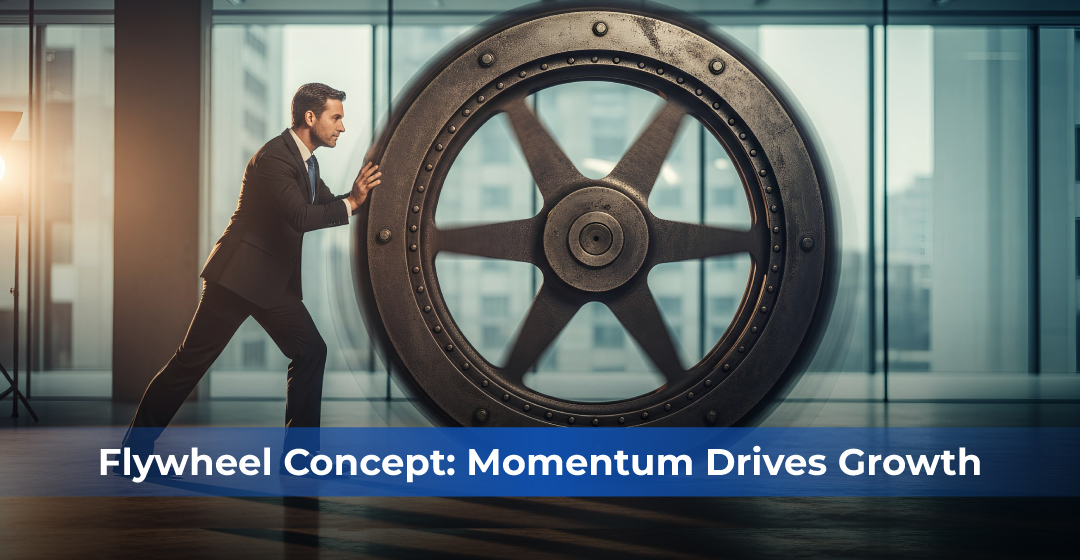






In Good to Great, Jim Collins introduces the flywheel concept. This is centered on the idea that lasting success does not come from one dramatic breakthrough, but rather from pushing a heavy flywheel again and again until momentum takes over.
What is The Flywheel?
Collins uses the image of a giant metal flywheel. At first, it takes a huge effort to push. You strain to move it even a few inches. But you keep pushing. With each turn, it moves a little faster. Over time, the wheel builds speed. Eventually, it spins almost on its own.
The key point here is that there is no single push that makes the difference. It is the cumulative effect of consistent effort.
Companies that go from good to great do not rely on one big launch, one new CEO, or a big and bold strategy. Instead, they follow a clear direction and keep reinforcing it with disciplined action. Each decision builds on the last, and momentum does the rest.
One of the most interesting findings in Good to Great is what Collins calls the ‘myth of the breakthrough’. When people look at successful companies, they often assume there must have been a defining turning point. But the reality is, there is no dramatic event that changes things overnight. Growth is gradual on the inside, even if it looks sudden on the outside.
Why This Matters for Entrepreneurs
Startups often fall into the trap of chasing quick wins, such as a new product idea or a new target audience. Constant pivoting stops momentum. The flywheel concept encourages an approach where you first get clear on your direction and then align your actions around it, improve your products, strengthen your teams, and repeat. Over time, these small improvements compound.
For example, a founder might focus on delivering excellent service. This leads to stronger customer satisfaction. Satisfied customers leave reviews and refer others. Referrals reduce marketing costs. Lower costs improve margins. Better margins allow reinvestment into the business. Each step reinforces the next and builds momentum. This is the flywheel effect.
Collins also links the flywheel to disciplined leadership. Great companies do not rely on hype, but steady growth, and leaders make decisions that support their long-term growth, not overnight success. For entrepreneurs, this means resisting the urge to constantly reinvent your business. It means sticking to what works and refining it until that momentum is built, even if progress feels slow in the early stages.
Momentum takes time, but once it builds, growth follows.
How to Build Your Own Flywheel
Understanding the flywheel is one thing. Designing your own is what creates growth.
Every business has a core loop that drives momentum. The key is identifying the activities that naturally reinforce one another.
Start by asking:
- What action directly improves customer value?
- What outcome does that create?
- How does that outcome strengthen the business?
- How can that strength be reinvested to improve the original action?
For example:
Quality service → Customer trust → Repeat business → Stronger cash flow → Investment in team and systems → Even better service.
The goal is not complexity. It is clarity. Once your flywheel is defined, focus on strengthening each part rather than searching for shortcuts.
Momentum is designed. It does not happen by accident.
Key Takeaways
- Success is not dramatic. It is built through repeated and focused effort, which drives momentum.
- When your strategy is clear, and your actions align with it, each step reinforces the next.
- Small improvements add up over time to create traction.
- Early progress may feel slow, but steady execution is what eventually makes growth feel almost effortless.












 Founder's Podcast
 Free Zone
 Offshore
 Mainland
 Accounting
 Banks
Banks Services
 Resources