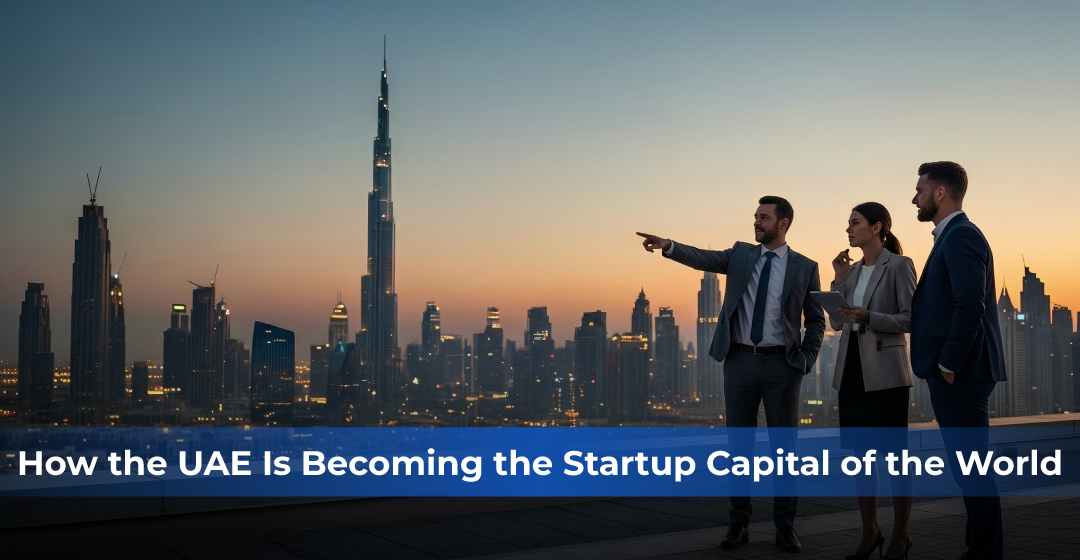






Over the past few years, the UAE has built one of the most supportive environments for startups anywhere in the world. What started as a push to attract international businesses has evolved into something much broader: a national effort to grow new companies, support founders and turn ideas into long-term businesses.
In 2025, the UAE government announced a nationwide campaign aimed at making the country the startup capital of the world. The emphasis has been on taking practical steps that make it easier to start, run and scale a business.
Big National Targets and New Goals
One of the clearest signs of this push is the UAE’s ambitious goals. The government has set a target of having two million companies registered by 2031, a roughly 67 per cent increase. This shows ambitions of wanting a thriving economy built on innovation, services and technology, not just oil.
Making It Easier for Young Founders
The UAE recently changed its laws to make it easier for younger people to start and run businesses. Previously, someone had to be 21 before they could legally form and manage a company on their own. Under the new rules, that age has been lowered to 18, meaning young adults can now start, own and operate businesses without extra legal hurdles.
This aligns the UAE with global norms and opens the door for recent graduates and early-stage founders to launch their ideas earlier in life. It also fits into broader efforts to attract and retain talent by giving young people real ownership of their ventures.
Practical Support
The UAE has invested heavily in startup hubs and accelerators that offer hands-on support.
In Abu Dhabi, Hub71 attracts founders by providing access to funding, mentors and corporate partners, with many startups using the platform to raise capital and scale internationally.
in5, based in Dubai Internet City, supports early-stage startups in technology, media and design through workspace, mentoring and business support. DIFC FinTech Hive, one of the region’s largest fintech accelerators, connects startups directly with banks, insurers and regulators to pilot new financial solutions. The Dubai Future Accelerators programme takes a more applied approach, pairing startups with government and large organisations to test technologies in real-world settings.
Outside the main commercial hubs, Sheraa, the Sharjah Entrepreneurship Center, plays a key role in supporting founders across sectors such as education and sustainability, with a focus on long-term growth and regional expansion.
Alongside these hubs, government partnerships are helping local entrepreneurs access wider networks and markets. Initiatives involving free zones and economic authorities are designed to give Emirati founders greater exposure to expertise, investment and global opportunities.
Training and mentoring remain central to the UAE’s strategy. Through national programmes and accelerator platforms, the country aims to train 10,000 aspiring entrepreneurs and create 30,000 jobs by 2030, lowering the barriers for first-time founders and making entrepreneurship a more realistic option for people at all stages of their careers.
Better Access to Funding
Access to finance remains one of the biggest challenges for startups globally. The UAE has taken steps to address this by expanding both public and private funding options.
Institutions such as the Emirates Development Bank have introduced financing products designed specifically for startups and small businesses. These are aimed at reducing the usual barriers, such as lengthy approval processes.
On the private investment side, Dubai and Abu Dhabi have seen an increase in venture capital activity. This gives founders access to local capital while remaining connected to international markets.
Founder-Friendly Policies
The UAE offers a range of residency options for entrepreneurs, investors and skilled professionals, making it easier for founders to live and work where they run their businesses.
Free zones continue to be a popular choice for startups, offering simple licensing and full foreign ownership. This creates a predictable environment for business owners.
Key Takeaways
There are a few things that make the UAE’s approach stand out:
- Clear Targets: Two million companies by 2031 gives both founders and investors a roadmap for growth.
- Lower Barriers: Younger entrepreneurs can start businesses earlier than before, helping broaden participation.
- Strong Ecosystem: From specialised hubs to funding and mentorship, founders aren’t left to figure things out on their own.
This level of support has helped the UAE transition into a global startup hub. For founders looking for access to capital, talent and international markets, the UAE is now the ideal destination of choice.









 Founder's Podcast
 Free Zone
 Offshore
 Mainland
 Accounting
 Banks
Banks Services
 Resources