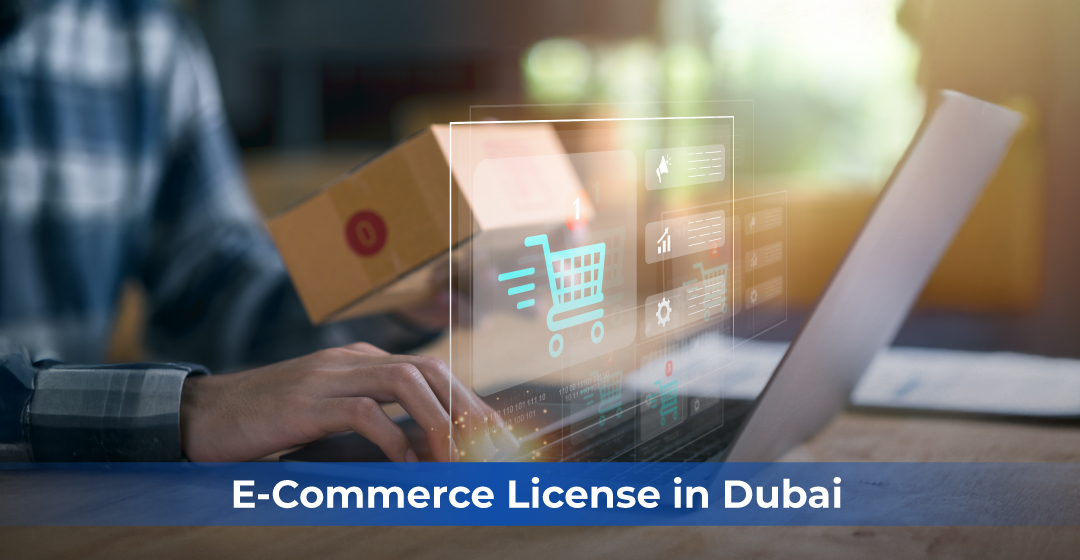






Over the past decade, Dubai has emerged as the Middle East’s e-commerce capital, propelled by its advanced digital infrastructure, a tech-savvy population, and forward-thinking government initiatives like the Dubai eCommerce Strategy 2023. Irrespective of industry, the emirate continues to attract global entrepreneurs, eager to tap into its burgeoning online market. Launching an e-commerce business in Dubai holds immense potential, and it starts with obtaining a Dubai trade license, or more specifically, an e-commerce license in Dubai.
E-Commerce License in Dubai
Getting an e-commerce license in Dubai is the gateway to operating your online business legally in Dubai. This license permits individuals and companies alike to sell products and services through online channels like websites, mobile apps, and online marketplaces. The e-commerce trade license falls under the category of commercial trade licenses. In the case of mainland companies, the license is issued by the Department of Economy and Tourism (DET). In the case of Free Zones, the license is issued by the respective Free Zone authority, such as Meydan Free Zone, IFZA, Dubai CommerCity, or DMCC.
Dubai: The Ideal Destination to Start an E-Commerce Venture
The UAE’s e-commerce market is one of the fastest-growing in the world. According to various news reports, the sector crossed a whopping AED 27 billion in 2023, highlighting an impressive year-on-year growth. Some of the factors that contribute to this surge include high levels of cellphone penetration, a young ‘digital-first’ population, and robust government initiatives like Dubai Pay and UAE Pass that have made it easier to manage online transactions and solidified the UAE’s efforts towards becoming a paperless economy.
Getting your e-Commerce license in Dubai
There are several steps to getting your e-commerce license in Dubai. They have been outlined below.
1. Pick a Jurisdiction:
Choosing between a Mainland and Free Zone setup will be the first decision you make in the process of getting your e-commerce license. A Mainland setup will allow you to trade directly within the UAE. A Free Zone is more ideal if your business primarily targets an international audience and you are looking for tax incentives and 100% foreign ownership rights.
However, with the introduction of the new Free Zone Mainland Operating Permit introduced by the Dubai Department of Economy and Tourism (DET), Free Zone companies can now legally conduct non-regulated business activities, without the necessity to establish a separate Mainland entity.
2. Pick a Business Name and Activity:
Choosing a business name that complies with UAE naming conventions. Following this, you will need to specify your online business activity. For example, Online trading, online retail.
3. Submit Your Documents:
Prepare all the relevant documents like passport copies, proof of residence, and business plan if applicable, and submit your documents and application to the relevant authority.
4. Apply for Initial Approval and License Issue
Once the application you have submitted is approved, you will receive your e-commerce trade license. As soon as you get your license, you can commence with full-scale business operations.
Additional Steps for Making the Most of Your E-Commerce Business License
Once your e-commerce business is up and running, the next steps will depend on the nature of your business model. If you are offering products or goods for sale, you can partner with a reliable payment gateway provider and logistics providers to streamline deliveries. If your business focuses on digital services or consultations, logistics support may not be necessary. You could focus on accelerating your online presence by building a secure, client-friendly e-commerce platform. You will need to ensure that your website is compliant with UAE data protection laws, with clearly outlined terms and conditions.
Compliance Guidelines to Keep in Mind
There are a few guidelines for your e-commerce business to be compliant and operate legally.
- Refund and return policies need to be clearly outlined.
- Customer information needs to be secured in accordance with the UAE Personal Data Protection Law.
- Product listings and advertisements need to adhere to the UAE consumer protection standards.
- E-commerce businesses need to register for VAT if the annual turnover exceeds AED 375,000
Launching an e-commerce business in Dubai may seem to be complex at first glance, but it doesn’t have to be. This is where business setup experts like InZone come into the picture. With over 30,000 businesses successfully launched and over a decade of expertise in business setup in the UAE, InZone is your one-stop partner for turning your dream of an online venture into a fully functional business. Contact us about the cost for an e-commerce license in Dubai and other related details.










 Founder's Podcast
 Free Zone
 Offshore
 Mainland
 Accounting
 Banks
Banks Services
 Resources