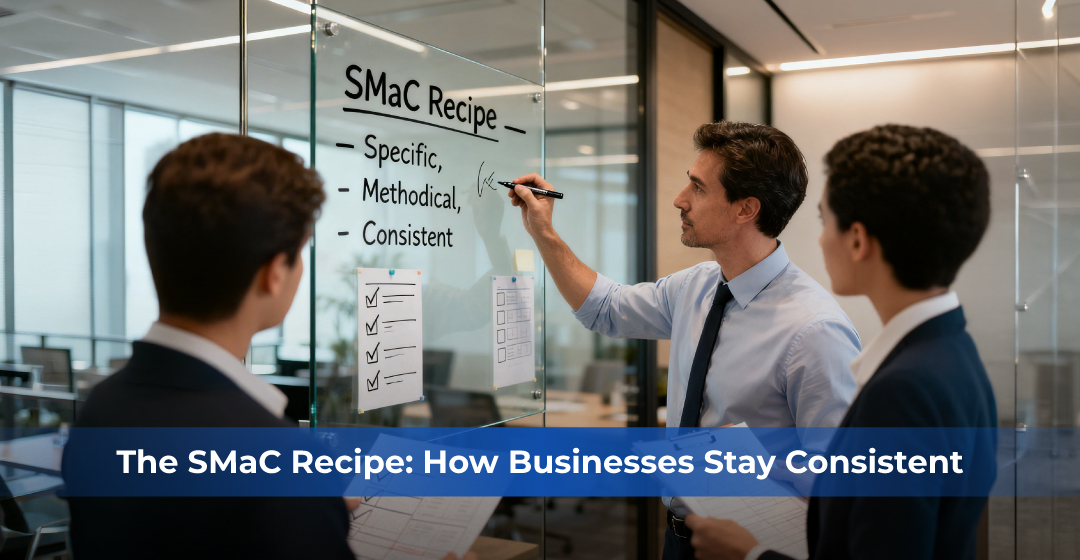






In Great by Choice, Jim Collins introduces the idea of the SMaC Recipe. This is a clear set of operating practices that your organisation sticks to overtime because it repeatedly works.
SMaC stands for Specific, Methodical, and Consistent.
Specific means its concreate, not vague. You can clearly identify what you will do and what you will not do. Methodical means it is not based on guesswork, but a deliberate way of operating that turns strategy into action. Consistent means you do not switch rules everytime things go wrong, but you keep steady.
A SMaC recipe is described as more enduring than tactics. Tactics are short-term moves you use in a particular moment. A recipe is a more repeatable system that keeps producing good outcomes, even when circumstances shift. Collins compares this to the US Constitution, which is durable but also amendable when needed.
Southwest Airlines: What ‘Specific’ Looks Like
The book gives an example from Southwest Airlines’ early years, linked to CEO Howard Putnam. Instead of announcing a generic goal like ‘we will be leading a low-cost airline’, he laid out a set of clear operating decisions. This shows what SMaC looks like in real life.
Putnam specified things like two-hour segments, using 737s, 10-minute turns, and a list of ‘no’s’ such as no food service and no seat selection. This recipe is easy to grasp, easy to follow, and makes decisions simple because the boundaries are clear.
The choice to only fly 737s is also significant as it meant pilots could fly any jet in the fleet and the company could standardize training, parts, maintenance, simulators, and boarding processes. This recipe is specific and well-thought-out.
Why This is Important for Entrepreneurs
Entrepreneurship is full of uncertainty. You cannot control the market, competitors, or disruptions. The best performers accept what they cannot control, but they also exert extreme control over what they can, and this is done through being SMaC.
A SMaC recipe forces order in uncertainty. Without a SMaC recipe, challenges may push you into making decisions reactively, changing priorities constantly, and losing sight of what actually makes your business work.
It is important to note that having the recipe is not enough. What really distinguishes the highest-performing organisations is how closely they stick to it, while also carefully amending it when circumstances change.
The 20% Rule
Collins notes that great companies change their SMaC recipe by no more than 20% per decade. Southwest Airlines stayed consistent over many disruptive events, yet still evolved through careful steps, such as adding longer flights and online bookings later on.
Your core recipe should stay stable, but it is important to leave room to adapt when reality changes. Over a decade, you should deliberately adjust a small portion, based on what’s proven to work, rather than completely reinvent.
Key Takeaways
- Be specific, methodical, and consistent. Write your rules regarding how your business operates in clear terms so anyone can tell what to do and what not to do.
- Stick to the SMaC recipe in uncertainty. Consistency reduces chaos and stops reactive decision-making
- Evolve carefully. Change only the necessary parts, the 20%, so you adapt without losing what makes you work.












 Founder's Podcast
 Free Zone
 Offshore
 Mainland
 Accounting
 Banks
Banks Services
 Resources